"Dentistry" (master), 2024

Code and name of the specialty 221 Dentistry
Ducational degree Master
Structural subdivision Faculty of Dentistry
Graduation department Department of Prosthetic Dentistry
Head of the Educational Programme Yanishen Igor
Implemented in action: from 01.09.2024
Discussion of the educational program

We invite employers, labor market representatives, graduates and all stakeholders to discuss projects of educational programs in order to confirm their relevance, compliance with learning outcomes (knowledge, skills, competencies) to the needs of the modern labor market. You can send your suggestions and comments to the mailbox or fill out the online form

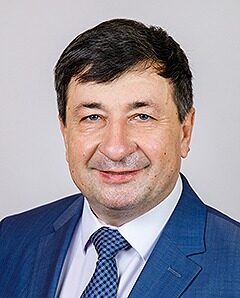
Yanishen Igor
Head of the Department of Prosthetic Dentistry, Doctor of Medical Science, Professor
iv.yanishen@knmu.edu.ua
  • General information
    Title of the Educational Programme Dentistry
    Type of the Educational programme Educational and Professional
    Higher education level Second (Master) level
    Qualification Level/Cycle NQF – level 7, EQF – level 7, QF-EHEA – second cycle
    Field of study 22 Health
    Subject area 221 Dentistry
    Specialization
    Educational qualification Master of Dentistry
    Professional qualification Dental practitioner
    Procedure for awarding professional qualification Professional qualification is awarded in accordance with the Procedure for Awarding Professional Qualifications at KhNMU
    Diploma qualification Higher education degree – Master’s degree
    Subject area – 221 Dentistry
    Educational programme – Dentistry
    Professional qualification – Dental practitioner
    Diploma type Master diploma, single
    Number of ECTS credits required to complete the educational programme 300 ECTS credits
    The University reserves the right to recognize and transfer no more than 30 ECTS credits earned within a previous study programme for individuals who have obtained a qualification at NQF Level 5 (the educational-qualification level of Junior Specialist, or Professional Junior Bachelor and Junior Bachelor degrees) in specialty 221 ‘Dentistry’.
    Form of study Full-time
    Estimated length of studies 4 years 10 month
    Availability of accreditation Accredited by National Agency for Higher Education Quality Assurance (Ukraine).
    Certificate No. 1359 valid until 01.07.2026
    Programme validity period From 2025 until next review
    Academic criteria for admission to educational programme Admission based on full general secondary education, Junior Bachelor and Professional Junior Bachelor degrees, or the educational-qualification level of Junior Specialist in specialty 221 ‘Dentistry’.
    Language(s) of instruction Ukrainian, English
    Educational programme URL https://knmu.edu.ua/en/program-catalog/dentistry-master-2024/
  • Aim of the study programme

    To provide academic training in fundamental and clinical biomedical sciences and to prepare graduates for professional practice as a dentist in the relevant primary position through the acquisition of general and special competencies, the creation of educational and scientific values in the field of healthcare, and the promotion of health development in accordance with the needs and trends of modern social development and the socio-economic situation.

  • Characteristics of the study programme
    Subject area (field of study, subject area, specialization) 22 ‘Health’
    221 ‘Dentistry’
    Object of activity: health preservation, in particular dental health, prevention, diagnostics, and treatment of human dental diseases.
    Learning objectives: training of a specialist capable of solving complex tasks and problems in the field of dentistry and healthcare or in the learning process, characterized by uncertainty of conditions and requirements, and performing professional activities of a dentist.
    Theoretical content of the subject area: knowledge of humanitarian, fundamental (natural and social), and clinical sciences regarding public health protection, prevention, diagnostics, and treatment of human dental diseases at the individual, family, and population levels, necessary for the professional activity of a dentist.
    Methods, techniques, and technologies: anamnestic, clinical, laboratory, radiological, and functional methods of diagnostics, treatment, and prevention of dental diseases, management and organization of work in the healthcare sector.
    Tools and equipment: modern diagnostic and treatment tools, items, and devices for professional activities.
    Programme features Integration of modern dental technologies and an interdisciplinary approach, specifically through the application of simulation and digital technologies and phantoms during theoretical and practical training; early practical specialization, and an emphasis on the personalization of dental care. The opportunity to study in English.
  • Employability and further education of graduates
    Employability of graduates Upon completion of the Professional Study Master’s Programme ‘Dentistry’, the specialist is qualified to perform the following professional roles:
    Medical Intern (Occupational Code – 3229).
    Employment in relevant physician positions in healthcare facilities after completing an internship (specialization) in the respective medical specialty.
    Academic rights of graduates For further professional training in the specialty, a dentist must enroll in postgraduate education programs where training is conducted according to dental-profile educational programs.
    Continuing education at the third (educational-scientific) level of higher education.
    Acquisition of additional qualifications within the postgraduate education system.
  • Teaching and assessment
    Teaching and learning Approaches: student-centered, person-centered, competence-based, practice-oriented, e-learning, simulation-based learning, learning through practice, and self-directed learning.
    Forms: training sessions (lectures, practicals, seminars, and consultations), independent work, practical training, completion of individual assignments, and assessment measures.
    Methods: lecture, storytelling, briefing, conversation, discussion, practice, business and role-playing games, situational exercise solving, case method, problem-based method, creative search, etc.
    Assessment Forms of control measures: oral examination (questioning), testing, demonstration of practical skills, practical training reports, oral/written credit tests, differentiated credit tests and examinations, certification, etc.
    Assessment: 4-point (‘excellent’, ‘good’, ‘satisfactory’, ‘unsatisfactory’), 200-point rating and 2-point (‘passed’, ‘failed’) scales are used.
  • Programme competences
    Integral competency Ability to cope with difficult tasks and problems in the field of health care in speciality “Dentistry” in the professional activity or during the process of training, the above providing researches and/or innovations and being characterized by indefinite conditions and demands.
    General competencies (GC) GC 1. Capacity for abstract thinking, analysis and synthesis.

    GC 2. Knowledge and understanding of the subject category and understanding of the professional activity.

    GC 3. Capacity for using knowledge in practical activity.

    GC 4. Capacity for communicating in the state language both in the oral and written forms.

    GC 5. Capacity for communicating in the English language.

    GC 6. Skills of using informative and communicative technologies.

    GC 7. Capacity for searching, processing and analysing information from different sources.

    GC 8. Capacity for adapting and acting in a new situation.

    GC 9. Ability to reveal, define and solve problems.

    GC 10. Capacity for being critical and self-critical.

    GC 11. Capacity for working in a team.

    GC 12. Commitment to environmental conservation.

    GC 13. Capacity for acting in the socially responsible and conscious way.

    GC 14. Capacity for realizing one’s rights and duties as a member of the society, recognizing values of the civil (free democratic) society and necessity of its sustainable development, the supremacy of the law, human and civil rights and freedoms in Ukraine.

    GC 15. Capacity for preserving and augmenting moral, cultural and scientific values and achievements of the society on the basis of understanding of the history and laws of development of the subject field, its place in the general system of knowledge about the nature and society and in the development of the society, engineering and technologies, using different kinds and forms of motor activity for active rest and leading a healthy lifestyle.

    GC 16. The ability to make decisions and act while adhering to the principle of zero tolerance for corruption and any other manifestations of misconduct.

    Special (professional, subject-specific) competencies (PC) PC 1. Capacity for collecting medical information about the patient and analyzing clinical data.

    PC 2. Capacity for interpreting results of laboratory and instrumental examinations.

    PC 3. Capacity for diagnosing: making an initial, clinical, final and secondary diagnosis and detecting medical emergencies.

    PC 4. Capacity for planning and carrying out measures for preventing diseases of organs and tissues in the oral cavity and maxillofacial region.

    PC 5. Capacity for designing the process of giving the first medical aid: defining

    approaches, plan, kinds and principles of treatment of organs and tissues in the oral cavity and maxillofacial region.

    PC 6. Capacity for determining the rational mode of work and rest and the diet for patients in treatment of diseases of organs and tissues in the oral cavity and maxillofacial region.

    PC 7. Capacity for choosing tactics for management of patients with diseases of organs and tissues in the oral cavity and maxillofacial region with concurrent somatic diseases.

    PC 8. Capacity for carrying out medical and dental manipulations.

    PC 9. Capacity for proving treatment of major diseases of organs and tissues in the oral cavity and maxillofacial region.

    PC 10. Capacity for organizing and carrying out medical and evacuation measures.

    PC 11. Capacity for choosing the tactics and methods of emergency medical aid and its provision.

    PC 12. Capacity for organizing and conducting a screening examination in dentistry.

    PC 13. Capacity for assessing environmental effects on the state of human health (in individuals, families and populations).

    PC 14. Capacity for keeping regulatory medical documents.

    PC 15. Processing of state, social and medical information.

    PC 16. Capacity for organizing and carrying out rehabilitative measures and care of patients with diseases of organs in their oral cavity and maxillofacial region.

    PC 17. Capacity for legal support of one’s own professional activity.

    PC 18. Capacity for providing premedical care under protocols of tactic medicine.

  • Programme learning outcomes

    PLO 1. To isolate and identify leading clinical symptoms, signs and syndromes (by List 1); to make a probable nosological or initial syndromic clinical diagnosis of a dental disease according to standard methods on the basis of preliminary data of the patient’s anamnesis, those of his/her examination and knowledge of the human being, human organs and systems (by List 2).

    PLO 2. To collect information about the patient’s general state, to assess the psychomotor and physical development of the patient, the state of organs in the patient’s maxillofacial region, to assess information concerning the diagnosis on the basis of results of laboratory and instrumental methods of examination (by List 5).

    PLO 3. To prescribe and analyse additional (compulsory and by choice; laboratory, radiological, functional and/or instrumental) methods of examination (by List 5) for patients with diseases of organs and tissues in their oral cavity and maxillofacial region for making a differential diagnosis of these diseases (by List 2).

    PLO 4. To define the final clinical diagnosis observing proper ethical and legal regulations by means of making a sound judgement and a logical analysis of available subjective and objective data of clinical and additional examinations and differential diagnosis under the control of the leading doctor in conditions of a medical institution (by List 2.1).

    PLO 5. To diagnose urgent states in any situations (at home, outdoors, at medical institution), in conditions of an emergency, martial law, lack of information and limited time (by List 4).

    PLO 6. To plan and implement measures of prophylaxis of dental diseases in population in order to prevent spreading of dental diseases.

    PLO 7. To analyse the epidemiological state and carry out measures for mass and individual, general and local pharmacological and nonpharmacological prophylaxis of dental diseases.

    PLO 8. To determine the approach, plan, kind and principle of treatment of a dental disease (by List 2) by making a sound judgement in compliance with current algorithms and standard schemes.

    PLO 9. To determine the character of the mode of work and rest and the necessary diet in treatment of dental diseases (by List 2) on the basis of an initial or final clinical diagnosis by making a sound judgement in compliance with current algorithms and standard schemes.

    PLO 10. To determine the tactics of managing a dental patient with somatic pathology (by List 3) by making a sound judgement in compliance with current algorithms and standard schemes.

    PLO 11. To provide treatment of major dental diseases in compliance with current algorithms and standard schemes under the control of the leading doctor in conditions of a medical institution (by List 2.1).

    PLO 12. To organize taking of medical and evacuation measures for population, military personnel, in conditions of an emergency, including martial law, during full-fledged stages of medical evacuation with consideration of the current system of medical and evacuation support.

    PLO 13. To determine the tactics for giving emergency medical aid with use of recommended algorithms in any conditions on the basis of the diagnosis of a medical emergency in conditions of limited time (by List 4).

    PLO 14. To analyse and assess state, social and medical information using standard processes and computer information technologies.

    PLO 15. To assess environmental effects on the state of human health in conditions of a medical institution according to standard procedures.

    PLO 16. To form aims and determine structure of one’s activity on the basis of the result of analysis of certain social and personal needs.

    PLO 17. To lead a healthy lifestyle, to use techniques of self-regulation and selfcontrol.

    PLO 18. To recognize and be guided in one’s activity by civil rights, freedoms and duties, to increase one’s educational and cultural level.

    PLO 19. To comply with requirements of ethics, bioethics and deontology in one’s professional activity.

    PLO 20. To organize the required level of the individual safety (of one’s own and people under care) in case of appearance of typical dangerous situations in the individual sphere of activity.

    PLO 21. To carry out medical manipulations on the basis of the initial and/or final clinical diagnosis (by Lists 2, 2.1) for different segments of the population and in different conditions (by List 6).

    PLO 22. To carry out dental manipulations on the basis of the initial and/or final clinical diagnosis (by Lists 2, 2.1) for different segments of the population and in different conditions (by List 7).

    PLO 23. To carry out manipulations for giving medical aid with use of standard schemes in any conditions on the basis of diagnosis of a medical emergency (by List 4) in conditions of limited time (by Lists 6,7).
  • Educational components

    The list of compulsory components of the curriculum of EP “Dentistry” of the specialty “Dentistry” of the Master educational degree:
    1st year
    2nd year
    3rd year
    4th year
    5th year

    The list of elective components of the curriculum of EP “Dentistry” of the specialty “Dentistry” of the Master educational degree:
    1st year
    2nd year
    3rd year
    4th year
    5th year

  • Resource provision for the implementation of the programme
    Staffing Meets the staff requirements for conducting educational activities at the second (Master) level of higher education and the study programme, that provides for the qualification in professions for which additional regulation has been introduced, established by the Resolution of the Cabinet of Ministers of Ukraine No. 1187 dated December 30, 2015 ‘On Approval of Licensing Conditions for Educational Activities of Educational Institutions’ (as amended).
    Head of Programme: Doctor of Medical Science, Professor.
    Material and technical
    support
    The provision of educational premises for the respective departments, computer workstations, and multimedia equipment complies with the Licensing Conditions for Educational Activities, approved by Resolution of the Cabinet of Ministers of Ukraine No. 1187, dated December 30, 2015 (as amended). The university maintains 7 civil defence shelters certified by the State Emergency Service of Ukraine (SESU). Clinical training facilities are fully available for practical education. The university operates a comprehensive network of specialized facilities, including: ‘University Hospital’ branch; Research Institute of Experimental and Clinical Medicine of KhNMU; Scientific and Practical Center for Preclinical and Clinical Research; Central Research Laboratory and the Experimental Biological Clinic; Problem-Based Research Laboratories; Tactical Medicine Training Center; Simulation Center, 3D Technology Center and Distance Learning Center of the Educational and Scientific Institute of Education Quality; Gender Education Center; Professor V.D. Otamanovskyi Center for Medical History; ‘Museum of Medicine’ complex; 4 Educational, Scientific, and Production Associations.

    KhNMU maintains 32 local area networks (LANs) and 55 wireless access points (Wi-Fi). The network and communication infrastructure are entirely based on fiber-optic technologies with data transfer speeds of up to 1 Gbps. There are 22 computer labs available for student use. Internet access is free of charge and unlimited for all students.

    All necessary social and living infrastructure is provided, including guaranteed students’ accommodation in university dormitories.

    University buildings and educational premises are fully equipped to ensure barrier-free access for persons with disabilities and other mobile-impaired groups.

    Information and
    methodological support
    Information and educational-methodological support is carried out through the university’s official website (https://knmu.edu.ua/), the Scientific Library, and the system of resources for distance and blended learning and ASU.

    The KhNMU Scientific Library has its own website http://libr.knmu.edu.ua, which serves as a convenient access point to various information resources of an educational and scientific nature, including:

    Internal Resources:

    – KhNMU Repository – the university’s main electronic archive and the first among medical higher education institutions (HEIs) in Ukraine to offer free access to educational, methodological, and scientific materials. It contains 32.5 thousand full-text documents, including over 3 thousand educational-methodological and lecture materials. The inclusion of these materials in the Repository provides students with the opportunity for self-study in 24/7 mode.

    – Professional-oriented e-content (FOeK): a web index with links to the full texts of educational and scientific book publications from the repositories of HEIs and scientific institutions of Ukraine (3,256 titles).

    – Electronic Catalog: contains over 330 thousand bibliographic descriptions, including over 11 thousand links to full texts (textbooks, educational-methodological literature, congress and conference materials, periodicals, etc.). Problem-oriented databases have been created and are constantly updated, particularly in the main areas of the university’s scientific research.

    External Resources:

    – Access to Databases: particularly those of a medico-biological profile, including PubMed, Medline, Cochrane Library, DOAJ, Open J-Gate, BioOne, etc.

    – Access to Citation Databases: Scopus and Web of Science.

    – Access to Educational and Scientific Resources of 30 International Companies: within the new collection “Current Resources in Support of Ukrainian Educators and Researchers in Wartime”, which includes AMBOSS, ScienceDirect, Springer, BMJ Best Practice and BMJ Learning, CAPSULE, EBSCO Health, Coursera, CASUS, etc.

    – Access to Specialized Collections: including “Academic Integrity”, “Soft Skills Development”, “Open Educational Resources”, “Open Journals”, “Resources on the History of Ukraine, Ukrainian Language, and Literature”, and others.

    During martial law in Ukraine, the KhNMU Scientific Library operates in a blended format, serving users both at physical workstations and remotely.

    The system of technological solutions and resources for ensuring the educational process includes relevant online resources and platforms: Moodle, corporate Google Workspace with its services, MS Teams, ASU, etc. The Distance Learning Center functions to coordinate and support the educational process, particularly in synchronous mode using distance learning technologies and hybrid classes.

  • Academic mobility
    National credit mobility National credit mobility is carried out in accordance with the Law of Ukraine ‘On higher education’ and agreements between educational institutions with the possibility of credit transfer.he agreements concluded for academic mobility provide exchange
    education of students within the framework of the Credit Transfer System with a possible transfer of credits (the scope of one credit is 30 hours)
    International credit
    mobility
    International credit mobility is carried out in accordance with the Law of Ukraine “On higher education” and agreements between educational institutions with the possibility of credit transfer.

    The University’s partner institutions include: Medical University of Warsaw (Poland); Biruni and Çukurova Universities (Turkey); Vilnius University (Lithuania); New Vision University (Georgia); among others.

    International student admission Within the licensed scope of the subject area.